
Architects’ fees depend on the size, type and quality of the project that a client requires. Fees vary for many reasons, yet as with most professional services, the fee generally reflects the level of service provided and the quality of the completed building.
Fineline Studio is an ARB- and TEE-registered architecture practice based in Athens, working across Greece and the UK. View our recent projects, or contact us to discuss yours.
If the brief and budget are well defined, fees are usually agreed at the start of a project. Where they are not, architects sometimes work on a time-charge basis for feasibility stages until the build cost, size and complexity are better understood. The cost of an architect should be considered together with the value that the particular practice can add to a project.
There are no mandatory architects’ fees in Greece today. Historically, engineers’ fees were set by law as minimums; since 2011 the fee you agree with your architect is a matter of contract. However, a notional fee is still calculated for every building permit through the TEE (Technical Chamber) system, based on a “conventional budget” derived from the building’s size, use and location. This calculated figure appears in the permit paperwork and is used for tax withholdings and TEE contributions, so you may see two numbers: the fee you agreed, and the notional fee in the system. This is normal, and a practice that explains it unprompted is a good sign.

Architects’ fees: options
In Greece, fees are typically charged in one of three main ways:
Lump-sum fee
A fixed fee, carefully defined against specific items of work. It gives the client certainty, but will need to be renegotiated if the nature of the appointment changes significantly. This approach suits a straightforward project with a clearly defined brief.
Percentage fee
A percentage of the construction cost (excluding VAT and professional fees), as this is generally proportionate to the work required. The fee adjusts automatically with the estimated construction cost as the design develops, without renegotiation, and is usually invoiced in stages as the work proceeds.
Clients sometimes worry that a percentage basis gives the architect no incentive to keep construction costs down. An architect is, however, providing a professional service under the TEE’s professional and ethical framework, and in our case also under the UK Architects Registration Board’s code, which requires honesty, integrity and proper care of the client’s interests. A practice’s reputation is built on delivered budgets, not inflated ones.
Time charge
Time-charged fees work well at the start of a project, before the scope is defined, and for feasibility reviews of plots or buildings before purchase. This option offers the least fee certainty, so an architect will usually estimate total hours or agree a cap.
Other key points to consider
- For larger projects with higher build costs, the percentage on which the fee is based will be lower, due to economies of scale.
- VAT at 24% is chargeable in addition to architects’ and engineers’ fees.
- Percentage fees are often only adjusted when the cost estimate moves by more than around 10%, allowing reasonable variation without constant renegotiation.
- Expenses (travel, printing, island trips) are usually charged in addition, and matter more on island projects.
- Disbursements made on your behalf, such as permit fees, municipal charges and paravola, are charged at net cost.
- The structural, mechanical, energy and topographic studies are separate scopes; confirm whether they are included in the architect’s fee or appointed separately.
By the end of a project, the total fee paid is likely to be in a similar region whichever approach is chosen. An architect is ultimately billing for time, and the hours a project needs do not change with the invoicing method.
Additional services
A full architectural service runs from concept design through permit, construction documentation, tender and site supervision. A schedule of services should accompany any fee proposal, listing what is included and what is excluded. Optional services are typically charged at an additional 0.5 to 2% each, depending on scope:
- Detailed joinery design: kitchens, wardrobes, bookcases and built-in furniture
- External and landscape design: surfaces, planting, boundaries, lighting
- Interior design and FF&E: furniture, fittings and equipment, including procurement and delivery coordination, which on island projects is a significant service in its own right
Contact us for a free introductory consultation and a stage-by-stage fee proposal for your project.

Fees in Athens and on the islands
Charge-out rates in Athens are broadly consistent with the rest of the mainland, but island projects carry higher fees. Travel and time on site increase, supervision visits involve ferries rather than a drive, and procurement and logistics demand more coordination. The premium is real but modest compared to the cost of an unsupervised island build.
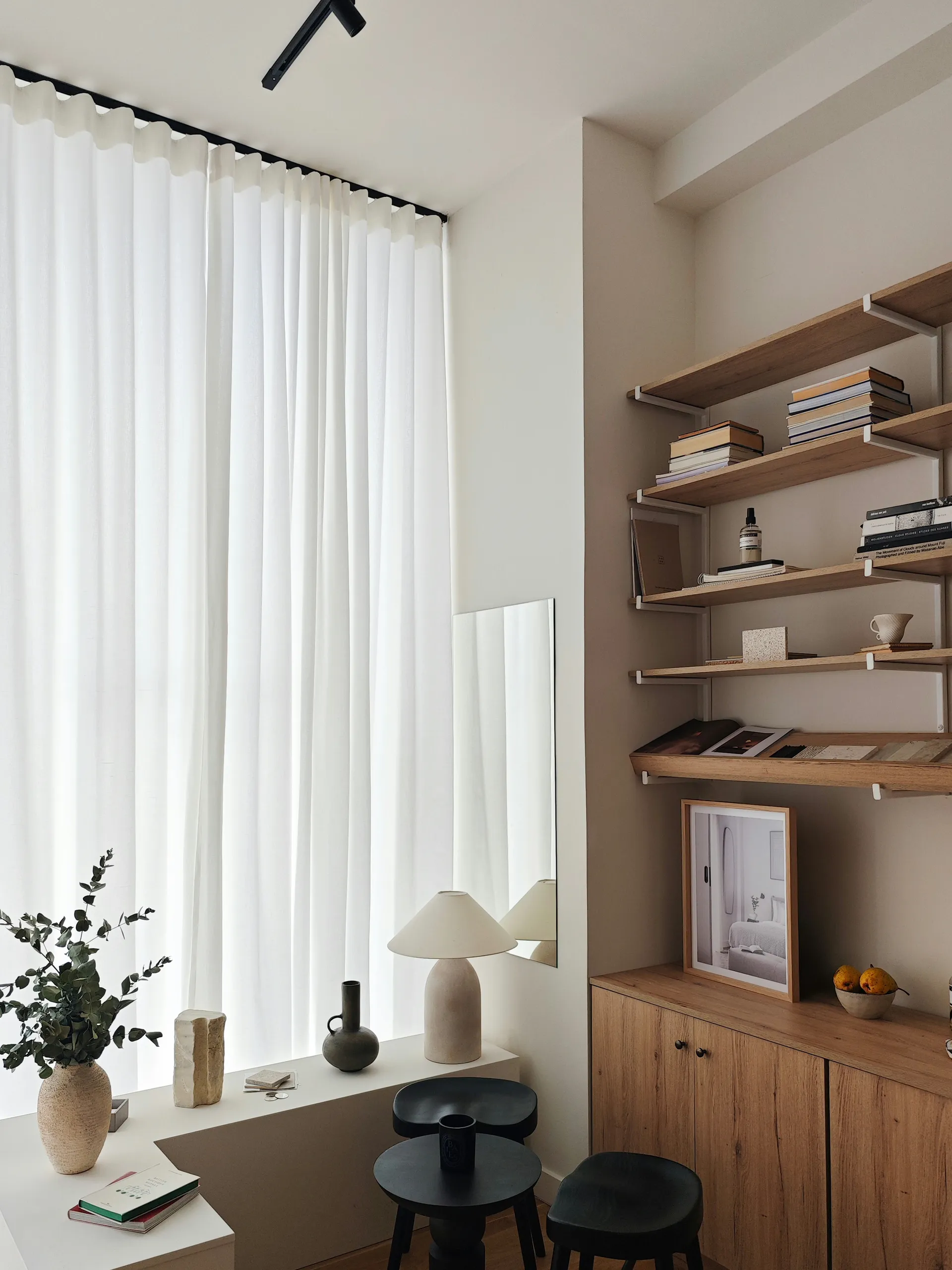
Residential architects’ fees
Residential work is among the most time-intensive project types for an architect. A client’s own home is a personal project, the commissions are often small and bespoke, and there are few economies of scale or repeated elements.
Comparative difficulty for various project types, where 1 is simple and 5 is complex:
- Private houses and villas for individual clients: 5
- Apartment renovations in existing buildings: 4 to 5
- Housing and apartment blocks: 4
- Office and commercial fitouts: 3
- Storage and utility buildings: 1
Fees for a new house
A new-build house on a clear plot is the most straightforward private residential type, and attracts the lowest percentages for residential work. For a full service, indicative fees may be:
- €150k budget: 11%
- €300k budget: 10%
- €600k budget: 9%
- €1m budget: 8.5%
Fees for apartment and house renovations
Renovations are resource-intensive due to the complexity of working with existing buildings: surveys, unknowns behind finishes, and the coordination of new services within old fabric. Indicative full-service fees:
- €100k budget: 14%
- €200k budget: 13%
- €500k budget: 12%
Fees for listed and protected buildings
Works to listed buildings (diatiritea) and buildings in protected settlements or archaeological zones are the most resource-intensive of all, involving additional consents, specialist detailing and often specialist craftspeople. Indicative full-service fees:
- €100k budget: 16%
- €200k budget: 15%
- €500k budget: 14%
Fees to permit only
Some clients appoint an architect to the building permit only, for example to realise a plot’s value before selling. Work to permit is typically around 30 to 35% of a full architectural fee. For a €500,000 project at a 12% fee, work to permit would therefore be in the region of €20,000 plus VAT.
Note that even with a full-service agreement, a client may end the appointment at any stage, provided fees for completed work have been paid.
Fees for drawings only
This service includes the construction drawings, details and specification in addition to the permit stage, but excludes tendering support and site supervision. Work to complete drawings is typically around 70% of a full fee, so for the same €500,000 project at 12%, fees to this stage would be in the region of €42,000 plus VAT. We would always encourage clients to retain supervision: it is the stage where the drawings are enforced and the budget defended.
Other considerations
A good architect can add significantly more value to a project than the fee they charge, whether in the increased value of the property, reduced running costs from an energy-efficient design, or simply in the daily enjoyment of a well-designed home. As a proportion of total project cost, and especially of lifecycle cost, architectural fees are small. It is therefore usually best to select an architect on the quality of their completed work, their references, and their ability to deliver a low-energy, low-maintenance building.
A construction project is a long and sometimes stressful process. It pays to choose an architect you are comfortable with personally, since you will spend a considerable amount of time together.
Visit our projects page to see recent work, or contact us to discuss your project.
FAQs about architects’ fees in Greece
How much do architects charge in Greece?
Fees depend on the size, type and quality of project. For residential work, full-service fees typically range from around 8.5% to 15% of construction cost, with lower percentages on higher-value projects and higher percentages on renovations and listed buildings.
How much are architects’ fees for a renovation?
Renovations are resource-intensive because of the complexity of existing buildings. For a construction budget of €200k, a full-service fee may be approximately 13%, plus VAT.
How much are architects’ fees for a new house?
For a new-build house with a construction budget of €600k, fees would be in the region of 9%, plus VAT on fees. Fees for the other engineering studies are additional unless stated.